


HostGator has been a trusted name in web hosting for over twenty years. It benefits both people and businesses by hosting over 2.5 million websites. This shows its reliability and trust. In this HostGator review, we’ll explore HostGator’s plans, pricing, and key features. We want to see if HostGator deserves its reputation and if it suits bloggers looking for a reliable host.
HostGator is one of the top hosting providers, alongside Hostinger and Bluehost. While it’s not the cheapest option, but still suitable to bloggers and new website owners. A key benefit of HostGator’s shared hosting plans is the free email marketing software. HostGator provides an uptime of 99.98%. However, its servers are mainly in the United States, which may limit users outside this area.
In this HostGator review, we’ll explore its hosting plans. We’ll analyze performance and security features. This will help you find the best plan for your blogging needs. Our findings are unbiased and aim for full transparency for our readers.
Table of Contents
HostGator at Glance
| Rating: | ★★★★☆ |
| Starting Price: | $3.75/month |
| Uptime: | 99.982% |
| Server Location: | United States |
| Recommended Plan: | Baby Plan ($4.50/month) |
| Security: | SSL and Malware Scanning |

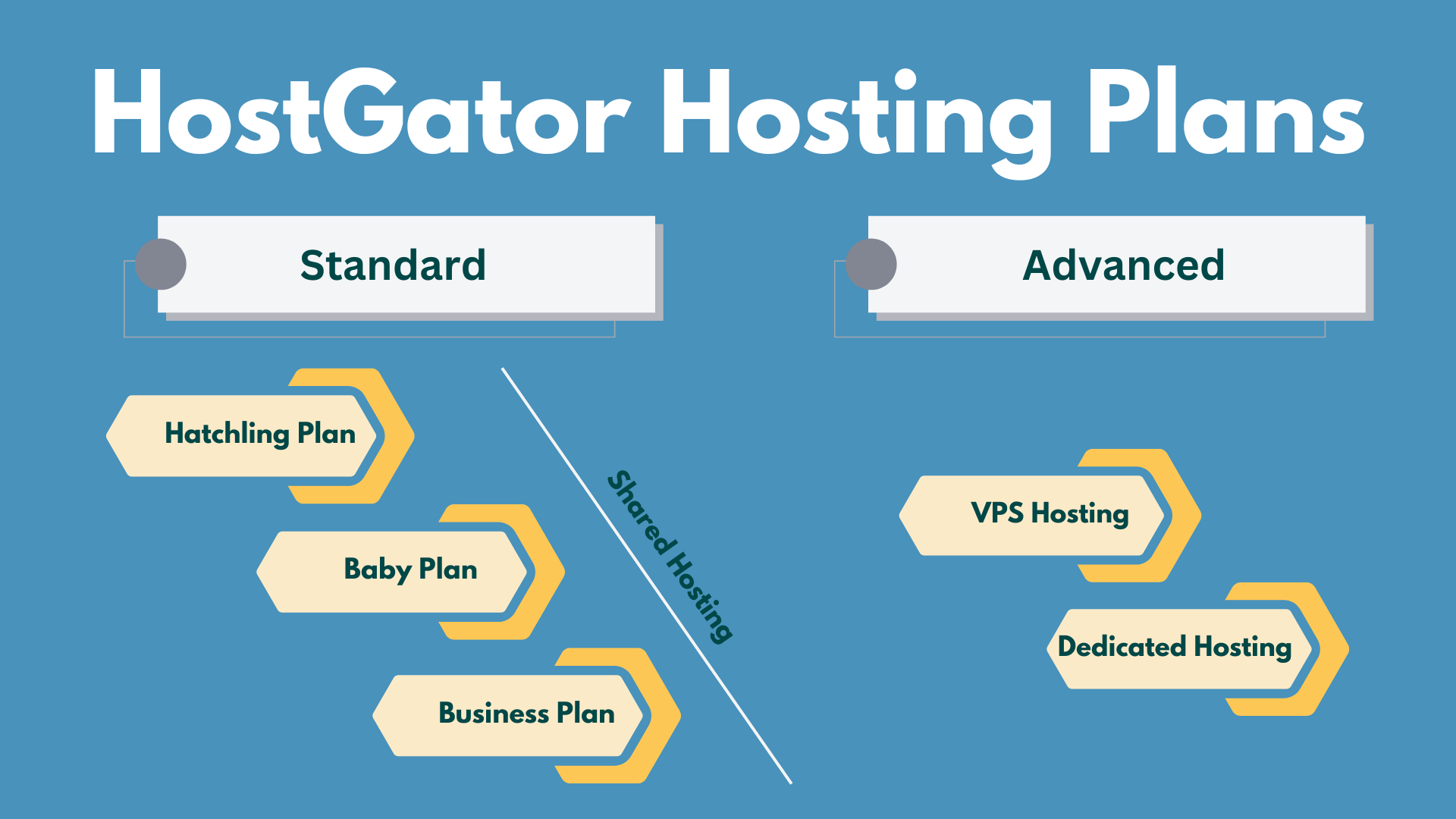
HostGator offers two main types of hosting: Standard and Advanced. The Standard category features shared web hosting with three sub-plans. These plans fit various needs and budgets. The Advanced category targets users who want more control and scalability. It includes VPS hosting and dedicated hosting for high-traffic websites and complex needs.
HostGator provides strong performance with a 99.98% uptime. This ensures reliable website operations. Its average response time is 650-780 ms, offering good speed. This makes HostGator a dependable choice for hosting needs.
HostGator offers basic security features. These include a free SSL certificate and firewalls to guard against threats. Users can also add SiteLock for more protection. SiteLock includes malware scanning and a web app firewall.
Pros &
Cons
- 99.98% Uptime
- 30-Day Money-Back Guarantee
- Ideal for Bloggers and Small Websites
- Responsive Customer Support
- Backups Not Provided for Free
- Restricted to US Servers
- Overpriced Renewals
- Lacks Features Compared to Competitors
HostGator Pricing: Which HostGator Plan should you buy?
When you choose a web hosting service, pricing matters as much as performance and security. So, it’s important to pick a plan that meets your needs. A common question is, “Which plan is best for me?” The answer is straightforward—the best plan is the one that meets your needs. Whether you’re a new blogger or a large business, HostGator has options for everyone.
If you plan to buy HostGator’s web hosting, you must know the differences between its plans. This HostGator review will help you make an informed choice about which plan to choose.
HostGator has 2 categories of hosting services:
- Standard Hosting– Shared web hosting
- Advanced Hosting-VPS & and Dedicated hosting
If you’re a passionate blogger, we recommend you to check out the Baby Plan. It includes most essentials to run your website effectively.
We have detailed all the plans. Check the specs and features in our pricing tables. This will help you choose what works best for you.
HostGator Standard Web Hosting

HostGator’s Standard hosting plan uses shared web hosting. This makes it great for small to medium-sized websites. It serves both bloggers and business owners. It offers reliability and functionality. HostGator offers three plans in its Standard hosting category: the Hatchling Plan, the Baby Plan, and the Business Plan.
Hatchling Plan
- Renews at $13.19 (12/mo term)
- Renews at $10.99 (36/mo term)
Baby Plan (suggested)
- Renews at $18.69 (12/mo term)
- Renews at $16.49 (36/mo term)
Business Plan
- Renews at $24.19 (12/mo term)
- Renews at $21.99 (36/mo term)
You can choose a monthly, yearly, or 3-year subscription. Remember, shorter subscriptions cost more. Our pricing-table indicates prices for the 3-year plan, which offers the best value. We suggest the 3-year plan. It includes a 30-day money-back guarantee. This lets you try the service and cancel if it doesn’t meet your needs.
| Features | Hatchling Plan | Baby Plan | Business Plan |
|---|---|---|---|
| Free Domain | Up to 1 year | Up to 1 year | Up to 1 year |
| Free SSL | Yes | Yes | Yes |
| Websites | Up to 10 | Up to 20 | Up to 50 |
| Traffic | No official limitations | No official limitations | No official limitations |
| SSD | Only 10 GB | 20 GB | 50 GB |
| Pro Email Trial | Up to 1 month | Up to 1 month | Up to 1 month |
| Cloudflare CDN | No | Yes | Yes |
| 1 Click WP Installs | Yes | Yes | Yes |
| Bandwidth | Unmetered | Unmetered | Unmetered |
| Malware Scanning | Yes | Yes | Yes |
| Money back guarantee | 30 days | 30 days | 30 days |
| Website Migration | Paid | Paid | Paid |
| Chat Support | 24/7 | 24/7 | 24/7 |
| Phone Support | No | Yes | Yes |
HostGator’s shared hosting plans work well for small to medium sites. They are great for bloggers and small business owners. The Baby Plan is the top pick. It offers 50 GB of SSD storage, a Cloudflare CDN, and phone support. These features are not in the Hatchling Plan.
If you need more, the Business Plan is a good choice. It supports up to 50 websites and offers an extra 50 GB of SSD storage. This plan also provides advanced support and resources for larger needs.
HostGator VPS Hosting

HostGator’s VPS Hosting uses advanced AMD EPYC servers and NVMe storage. This setup offers a fast and scalable hosting experience. It runs on AlmaLinux 9, ensuring stability and efficiency. Centralized DDoS protection keeps users safe from threats.
To boost connectivity, HostGator partners with several bandwidth providers. These include AboveNet, AT&T, Comcast, Global Crossing, Level (3), and NTT. This gives users reliable and varied network options.
The VPS hosting service comes in three plans: Snappy 2000: NVMe 4, Snappy 4000: NVMe 8, Snappy 8000: NVMe 16.
Snappy 2000 – NVMe 4
- Renews at $54.99 (12/mo term)
- Renews at $53.99 (36/mo term)
Snappy 4000 – NVMe 8
- Renews at $85.99 (12/mo term)
- Renews at $83.99 (36/mo term)
Snappy 8000 – NVMe 16
- Renews at $131.99 (12/mo term)
- Renews at $128.99 (36/mo term)
HostGator VPS Hosting has several payment options. You can choose from monthly, quarterly, semi-annual, annual, 2-year, and 3-year plans. This flexibility is great, but remember that VPS hosting is a premium service.
We suggest choosing a yearly plan instead of a monthly one. It offers better value. The 1-year plan is a practical choice among the yearly options. The price difference between the 1-year and 3-year plans is small. It also lets you try the service and gain experience before committing to a longer plan.
| Features | Snappy 2000: NVMe 4 | Snappy 4000: NVMe 8 | Snappy 8000: NVMe 16 |
|---|---|---|---|
| CPU Cores | 2 | 4 | 8 |
| Storage | 100 GB NVMe | 200 GB NVMe | 450 GB NVMe |
| RAM | 4 DDR5 | 8 DDR5 | 16 DDR5 |
| Bandwidth | Unmetered | Unmetered | Unmetered |
| IP Address | Dedicated IP | Dedicated IP | Dedicated IP |
HostGator’s hosting plans mainly differ in vCores, storage, and RAM. All other features are the same, as shown on the official website. We recommend the Snappy 4000 NVMe 8 plan. It offers better performance and scalability than the Snappy 2000 NVMe 4 plan.
The Snappy 2000 offers 2 vCores, 100 GB storage, and 4 GB RAM. In contrast, the Snappy 4000 provides 4 vCores, 200 GB storage, and 8 GB RAM. This upgrade gives more capacity and flexibility. Your choice should reflect your specific needs.
Keep in mind that these VPS plans cost more than HostGator’s Standard shared hosting plans.
HostGator Dedicated Hosting

HostGator’s Dedicated Hosting features the strong Value – NVMe 32 plan. It offers great performance thanks to AMD EPYC processors. This plan provides a powerful and reliable hosting solution for demanding needs.
Value – NVMe 32
- Renews at $180.32 (12/mo term)
- Renews at $176.79 (36/mo term)
HostGator provides flexible payment options to fit various budgets and preferences. You can pay monthly, quarterly, or semi-annually. You can also choose longer plans of 12, 24, or 36 months.
| Features | Standard NVME 32 |
|---|---|
| CPU Cores | 8 |
| Storage | 1000 GB NVMe |
| RAM | 32 GB DDR5 |
| Migration | Free (>12/mo term only) |
| Bandwidth | Unmetered |
| IP Address | 1 Dedicated IP |
HostGator’s Dedicated Hosting is perfect for tech experts and busy business sites. The Standard NVMe 32 plan has 8 CPU cores, 1000 GB of NVMe storage, 32 GB of DDR5 RAM, and unmetered bandwidth. It also offers free migration for contracts longer than 12 months. Plus, it comes with a dedicated IP for great performance in demanding situations.
It’s not meant for beginners or small blogs because of its complex features and higher costs.
Quick Verdict: HostGator's Standard web hosting plans suit passionate bloggers. The Baby Plan is especially recommended. It costs only $4.50 per month and provides 20 GB SSD and supports up to 20 websites. This plan offers both affordability and excellent value.
Is HostGator a reliable choice? Performance, Security and Support
We have seen different plans and pricing offered by HostGator. Now, let’s check HostGator’s reliability as a hosting provider. We’ll consider three key factors: performance, security features, and customer support quality. This HostGator review will look at the key factors. We’ll see if HostGator deserves its reputation.
It will show if it’s a reliable choice for passionate bloggers and website owners.
HostGator Performance Overview
When you evaluate performance, two key metrics are uptime and response time. These factors are key for boosting your blog or website’s search engine rankings. They also directly impact SEO performance helping you meet your goals.
But short-term assessments often miss the full picture of a hosting provider’s abilities. To get a clearer view, we’ll look at long-term data from the past five years. This will help us understand the provider’s consistency and reliability better. Then, we can make a more informed evaluation.
Note: The tests for this evaluation use real-time, long-term data. This gives a clear and accurate analysis. It ensures our findings are credible and thorough.
Uptime
Uptime is the percentage of time a website or server is running and available to users. It shows how well a site functions without interruptions. Uptime is a key SEO metric that affects user experience and retention. Ignoring uptime can harm customer satisfaction and lower your search engine rankings.
So, focusing on uptime is key for a reliable online presence and achieving long-term goals.
I analyzed HostGator’s uptime to check its reliability. I looked at three different time frames: short-term, medium-term, and long-term. This helps us see its performance over time. Reviewing these periods helps us see past issues and check HostGator’s uptime consistency. This way, we ensure a complete and accurate evaluation.
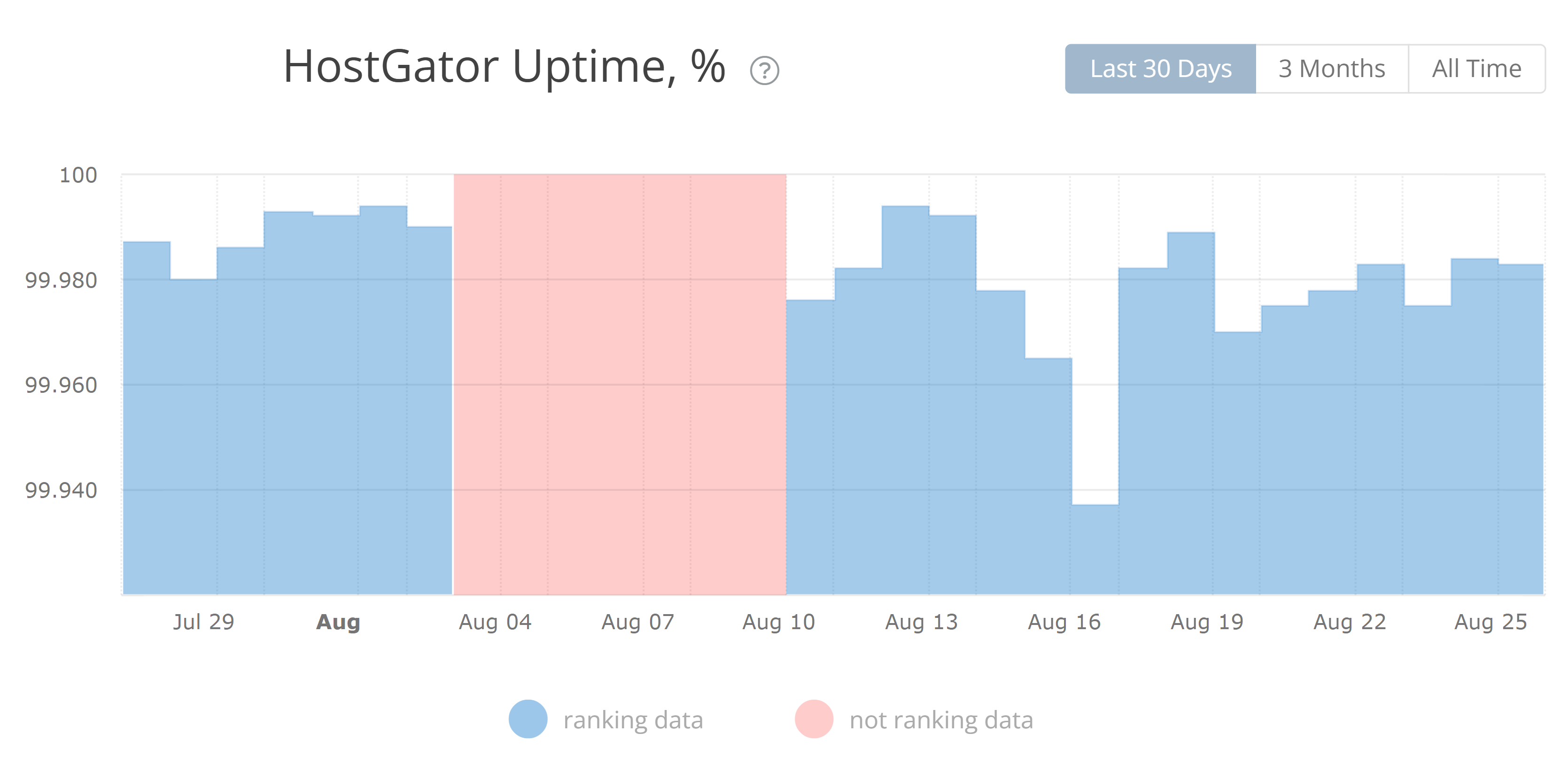
To evaluate HostGator’s short-term uptime, we analyzed a 30-day period. During this time, the uptime percentage was 99.982%. This shows strong reliability and minimal downtime. It reflects HostGator’s ability to keep consistent availability for its users.
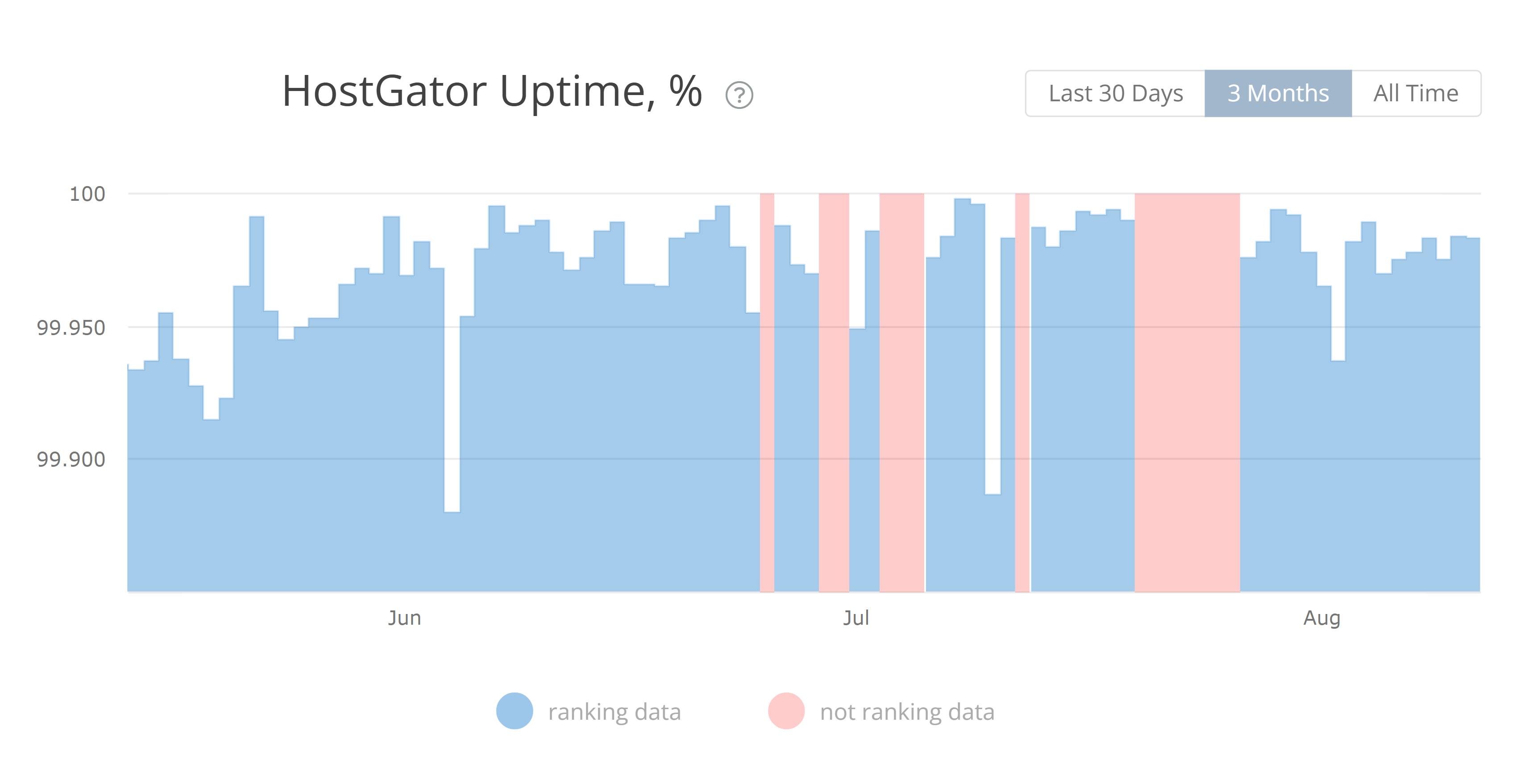
For a mid-term evaluation of HostGator’s uptime, we analyzed 90 days. The uptime percentage during this time was 99.97%.
I analyzed real-time data from 2019 to 2025 for a long-term evaluation. The uptime percentage during this period was about 99.981%. This shows that HostGator delivers reliable performance without fail. It highlights HostGator’s stability and dependability as a hosting provider.
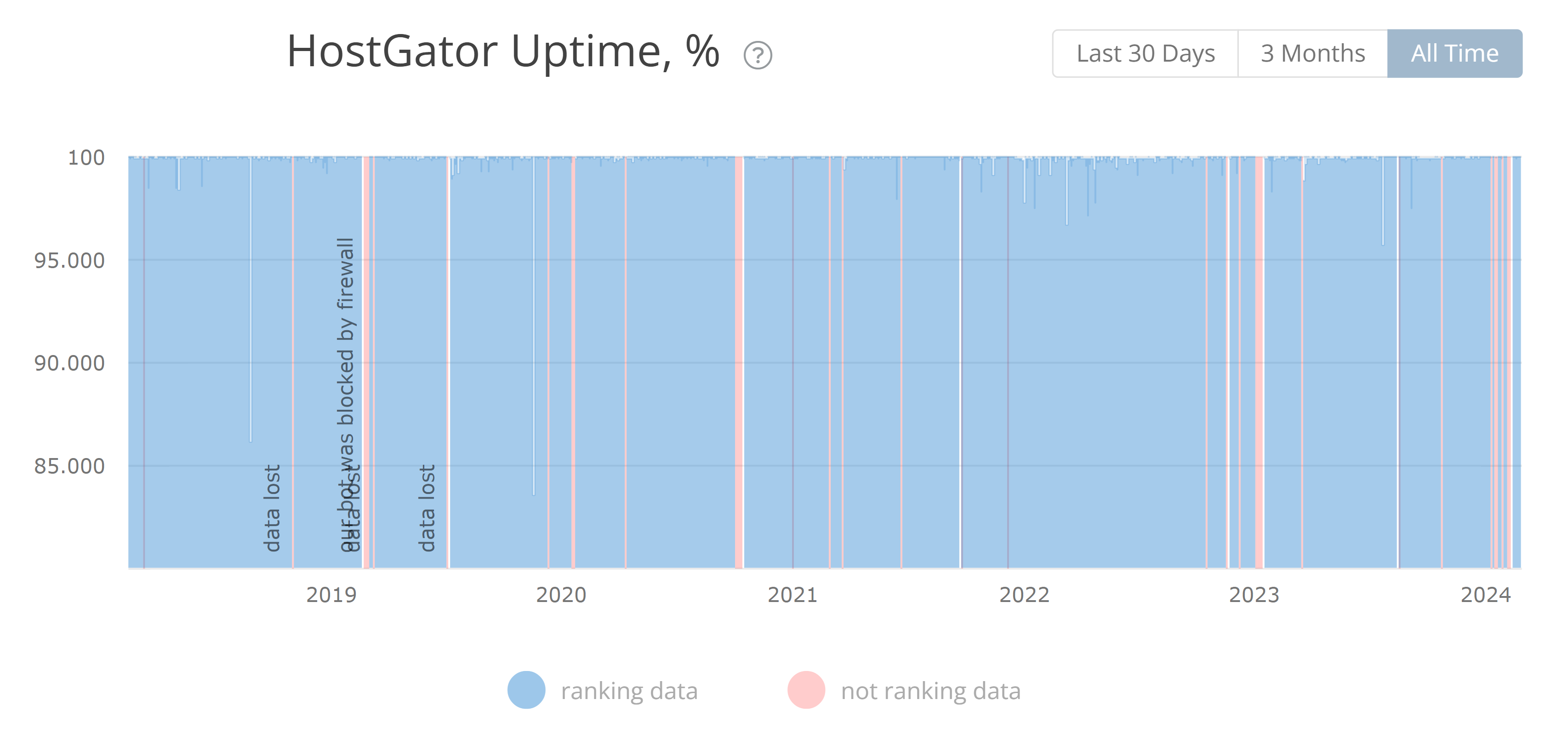
Quick Verdict: HostGator is very reliable. It boasts an uptime of 99.98% in short, medium, and long-term tests. This means users can count on consistent performance.
Response time
Response time measures how fast a server responds to a request, usually in milliseconds. It focuses on the server’s initial reply. Page speed, on the other hand, is the total time it takes for a webpage to fully load for the user.
We analyzed HostGator’s response time over more than five years, from 2019 to 2025. During this time, the response time varied from 700 to 1400 ms.
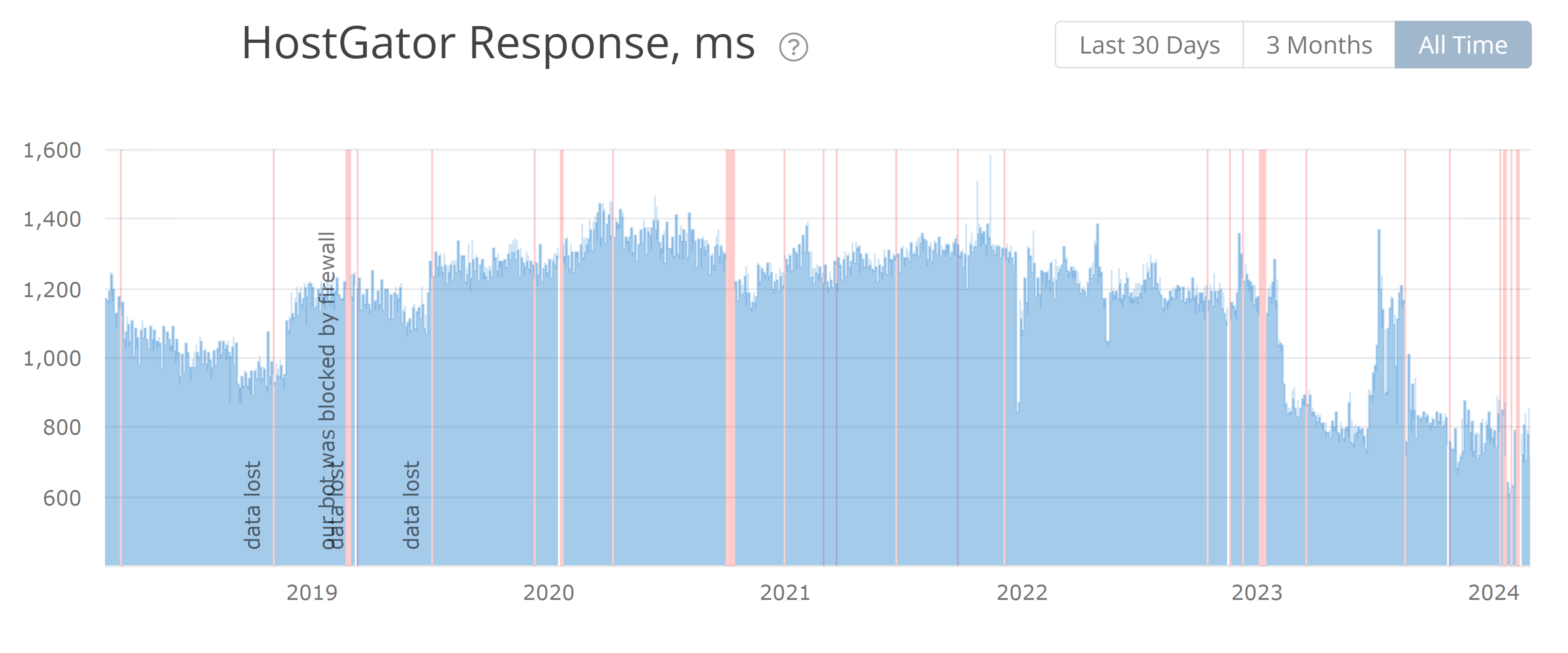
Recently, HostGator has improved significantly. Response times now consistently range from 650 to 780 ms. This shows a clear boost in server performance and reliability.
Quick Verdict: HostGator's response time varies from 650 to 1400 ms. This is good for everyday websites and blogs with small to moderate traffic. But high-traffic sites or resource-heavy setups may need a faster hosting provider.
Final thought on HostGator Performance– It provides reliable performance with 99.98% uptime. This makes it great for personal blogs and small to medium websites. However, its response times range from 650 to 1400 ms. This may not work well for high-traffic or resource-heavy sites.
Does HostGator lacks in security?
Security is a critical aspect when evaluating hosting providers. HostGator provides basic protections and extra paid features. In this HostGator review, we’ll look at HostGator’s security measures. We’ll find any gaps and suggest steps users can take for better site protection.

HostGator provides several key features to safeguard its servers and user accounts:
- SSL Certificates: Every HostGator hosting plan comes with a free SSL certificate. This keeps data safe and protects users’ sensitive information. However, for domains registered outside HostGator, manual SSL activation may be needed, which can be arranged through their support team.
- Server-Level Firewall and DDoS Protection: HostGator has custom firewall rules and strong DDoS protection. These tools help block bad traffic and cyberattacks. In heavy flooding, their data centers provide network-level flood protection. This helps keep the servers stable.
- Other Security Protocols– Hidden server headers, Blocked clickjacking attacks. These steps help keep websites safe from common threats.
While HostGator performs well in many areas, there are some notable gaps in its security framework:
- No Secure Cookies: By default, secure cookies are not used. This raises the risk of information interception.
- No Content Security Policy (CSP): Websites without a CSP are open to cross-site scripting (XSS) and clickjacking attacks.
- HSTS not enforced: This increases the risk of man-in-the-middle attacks on unsecure HTTP connections.
- DNSSEC Not Enabled: HostGator domains do not support DNSSEC, which helps stop DNS spoofing attacks.
Quick Verdict: HostGator provides reliable basic security features. These include SSL certificates, firewalls, and DDoS protection. This makes it a good option for personal blogs and small to medium websites. However, there are some gaps which shows a scope of improvement.
Is HostGator Customer Support Good?
HostGator provides various customer support channels to meet users’ needs. However, like any service, it has limitations. This HostGator review examines the HostGator customer support.
HostGator has these support channels:
- 24/7 Live Chat: Always on, easy to access via their website or dashboard.
- Phone Support: A good choice for users who like talking to someone.
- Knowledge Base: A large collection of articles, guides, and videos on many topics.
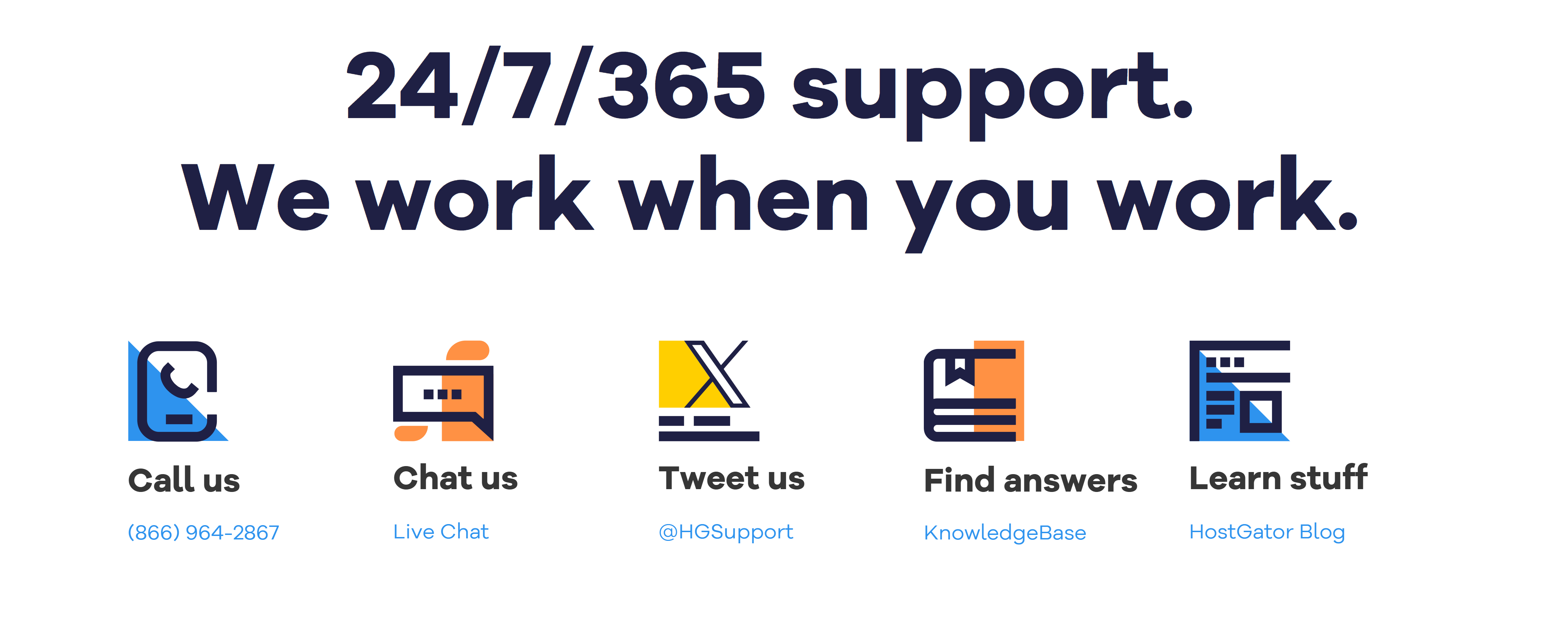
HostGator has some strong features, but its support has a few challenges:
- Restricted Ticketing System: There is no fully accessible ticketing system. This could frustrate users with more complex issues.
- Limited Support for Entry Plans: Basic plans like Hatchling and Baby only offer live chat. This may not work for users who want phone support.
- No Email Support: Users who prefer written communication might find the lack of email support inconvenient. It also makes it hard to keep detailed records.
Quick Verdict: HostGator’s customer support is reliable for quick and basic issues. Live chat and phone support work best. Users on higher-tier plans will see the most benefits. However, those needing email support or detailed ticketing may find the service lacking. Ultimately, it provides a good user experience.
Is HostGator a Reliable Choice? Yes, HostGator is a reliable hosting option. It boasts an uptime of 99.98% and a response time of 700ms, showing solid performance. There are some security gaps to fix, but it’s still a trustworthy choice. This is especially true for bloggers and medium-sized websites with modest needs. For those with basic to moderate requirements.
HostGator offers a good mix of reliability and performance.
How to host a website on HostGator?
Setting up your website on HostGator is a quick and straightforward process. With just a few simple steps, you can have your site up and running in no time. In this HostGator review, I’ll guide you through each step. This way, the process will be easy and efficient.
Step 1: Choose a Hosting Plan
The first step in your HostGator journey is choosing a hosting plan that fits your needs and budget.
After looking closely at HostGator’s options, we recommend the Baby Plan under Standard Hosting. It offers flexibility and great value, making it perfect for many users. In this guide, we will use the Baby Plan for a hands-on setup tailored to your needs.

Step 2: Choose name for your website
The next key step in setting up your website is picking a good domain name. You can skip this step and do it later, but it’s best to choose a domain name now. Picking the right domain extension and creating a custom name that fits your blog niche will build your online identity
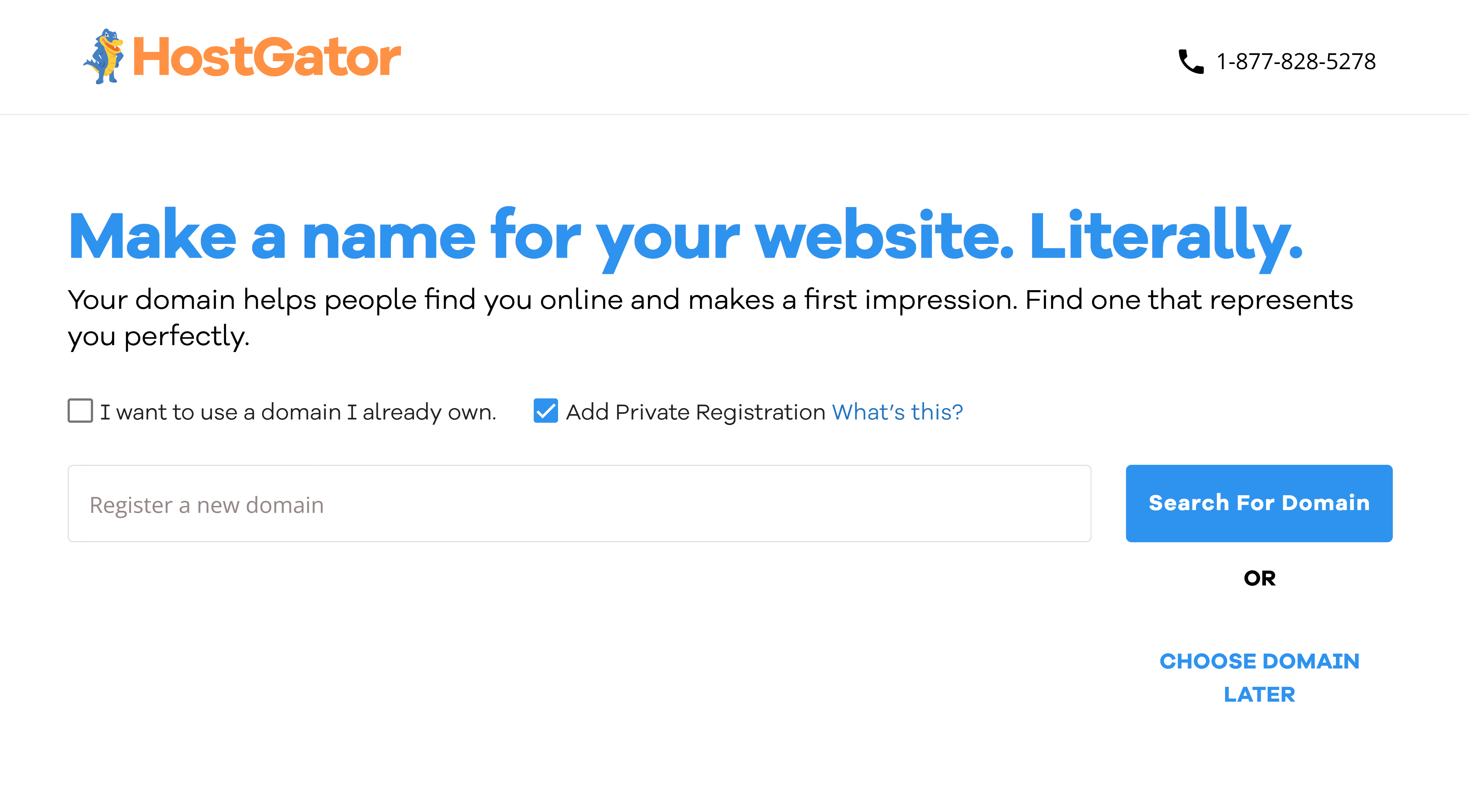
It will also leave a lasting impression on your audience. Take your time to find a name that aligns with your brand and blogging goals before moving on.
Step 3: Review Your Cart
After you finalize your domain name and choose a plan, go to the cart. Here, you’ll see a detailed pricing breakdown. For example, the Baby Plan for 36 months costs $162. Plus, HostGator offers a free one-month trial for Professional Email.
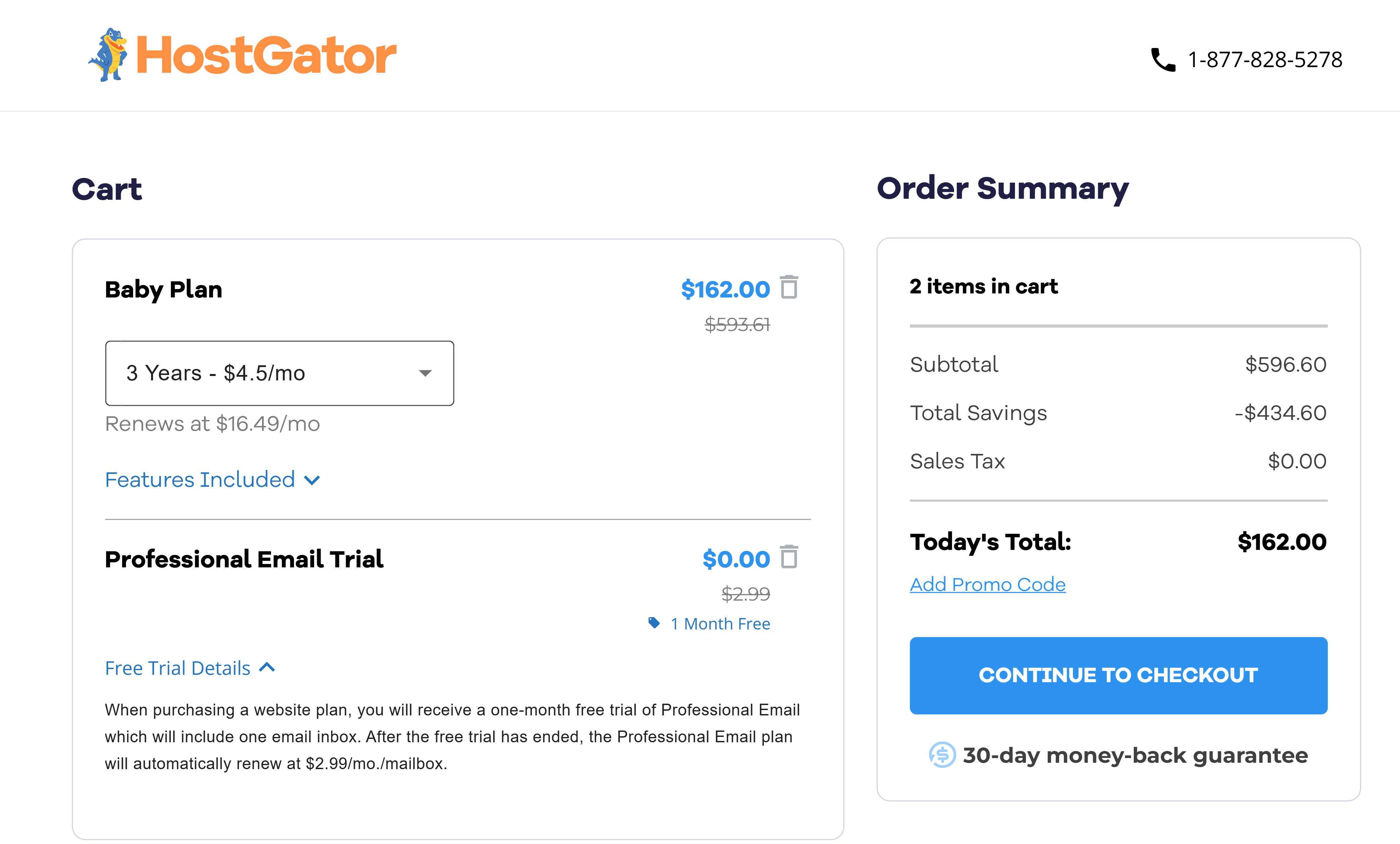
This is a great time to double-check your details. Make sure the plan and term match your needs. If you want, you can change the term to 12 months or other options that fit your budget. When you’re satisfied, you can confidently proceed with the purchase.
Note: HostGator provides a 30 days Money Back Guarantee as well.
Step 4: Billing Information
This is the last step before checkout. You need to enter your billing details, like your name, address, and email. Once you fill these out, you’ll see an order summary to check.
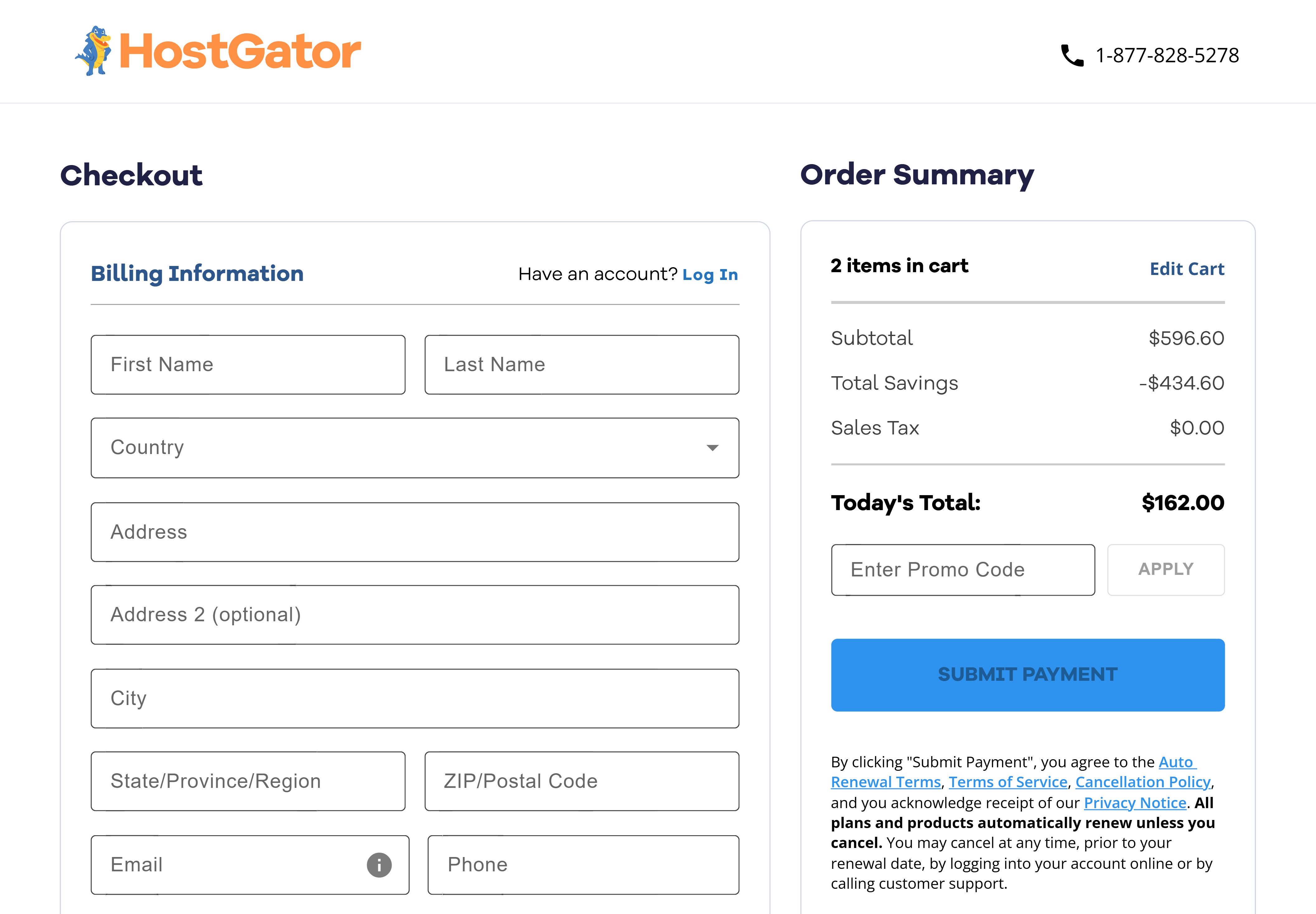
Please take a moment to confirm all the information is correct. When everything looks good, click “Submit Payment” to pay with your chosen method. After this step, your HostGator setup is nearly complete, and you’re ready to move on with your website.
Step 5: HostGator Dashboard and Website Builder
Now that you have a HostGator plan and a domain name, it’s time to create your website. After completing your payment, log in to the HostGator dashboard with your credentials. Then, follow the easy steps to add your site.
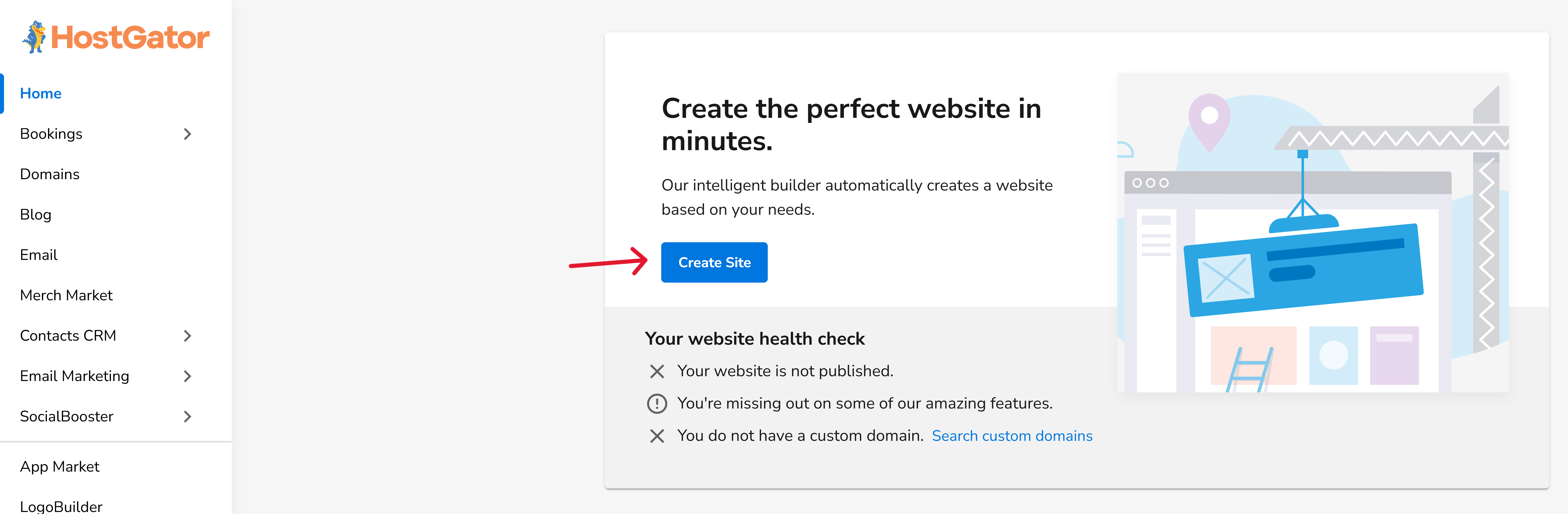
To build your site, click on “Create Site.” You’ll see two options: build from scratch or use WordPress for a faster setup. Pick a WordPress template that suits your blog or business. Then, start customizing it right away.
And that’s it. In just minutes, your account is set up, and your website is live. It’s that simple.
Now get ready to share your content with the world.
Final Verdict
HostGator is a solid choice for bloggers and website owners seeking affordable hosting. Its Baby Plan costs $4.50 per month, and base plans starting at $3.75. This plan offers great value and flexibility. The platform boasts strong performance with a 99.98% uptime and an average response time of 650 to 780 ms. This makes it a reliable option for smooth website operations.
However, HostGator’s security features are basic and could use some upgrades. Also, renewal rates are high, but the platform offers excellent customer support, especially for users on higher-tier plans.
In summary, HostGator balances affordability, performance, and support. There is room for improvement in security and pricing clarity, but it remains a strong option for bloggers and small to medium websites. If you want dependable hosting with good performance and user-friendly features, consider HostGator.
HostGator Review: FAQs
Is HostGator legit?
Yes, HostGator is a real and trusted web hosting provider. It has been around for 20+ years. It offers various hosting services, such as shared, VPS, and dedicated hosting. HostGator is well-known for its affordable plans. Its user-friendly features make it a top choice for beginners and small to medium-sized website owners.
Like any service, it has its ups and downs. It provides reliable uptime and quick customer support. However, some users find its security features basic and renewal rates high. Overall, HostGator is a solid choice for hosting your website, especially if you want affordability and ease of use.
Is HostGator free?
No HostGator is not completely free, but it offers valuable features with its paid plans. For example, you get a free domain name for the first year. You also get a free trial of Professional Email. Plus, you access tools like a free CDN to boost your website’s performance.
You will need to pay for the hosting plan, which starts at $3.75 per month for the Baby Plan during the promotion. HostGator has a 30-day money-back guarantee too. This lets you try the service without risk and request a refund if it doesn’t meet your needs.
Is HostGator better than GoDaddy?
HostGator and GoDaddy are well-known names in web hosting, each serving different needs. HostGator gets high marks for its features. It offers a 99.99% uptime guarantee, fast loading speeds, and an easy-to-use dashboard. It also provides strong security with free SSL certificates and a server-level firewall. HostGator offers great perks. They appeal to bloggers and website owners who care about performance and reliability.
In contrast, GoDaddy excels in domain registration. It offers an all-in-one solution that includes hosting, domain services, and website-building tools. This approach appeals to users who want convenience. GoDaddy has mixed reviews for its hosting and security features. There have been past concerns about data breaches.
Ultimately, your choice between HostGator and GoDaddy comes down to your needs. HostGator focuses on hosting performance and ease of use. GoDaddy is better for those who want domain management and bundled services. Both are reliable, but your priorities will guide the best option.
Does HostGator offer free email?
HostGator provides free email services with its hosting packages. Some plans let you create unlimited email accounts. Plus, HostGator offers a one-month free trial of its Professional Email service, which you can upgrade later.
You can set up and manage your email accounts easily through HostGator’s cPanel. You can also access your email via webmail or clients like Thunderbird. For more advanced needs, HostGator integrates with Google Workspace. This gives you Gmail’s interface and tools, plus better spam protection.
Does HostGator have a website builder?
Yes, HostGator has a website builder called the “Gator Website Builder.” It helps users create websites without any coding skills. It has a drag-and-drop interface. You can customize templates. It also provides tools for adding blogs, shopping carts, and payment gateways. HostGator offers an AI website builder. It simplifies design for your business or product.
However, HostGator does not provide the Gator Website Builder for new signups. Existing users can still access it. This tool allows website creation without any coding knowledge. HostGator helps new users by offering WordPress integration. This is a great option for building websites.
What are the best alternatives to HostGator?
When seeking alternatives to HostGator, consider Bluehost and Hostinger.
Bluehost is ideal for beginners and small to medium websites, especially for WordPress users. Plans start low and include a free domain for the first year. It has a user-friendly dashboard and strong customer support. While renewal rates are higher, its affordability and ease of use make it a solid choice.
Hostinger is famous for low pricing and strong performance. Plans begin at just $2.99 per month, making it a smart pick for budget-conscious users. Hostinger features a modern dashboard, free SSL certificates, and fast speeds. This appeals to those who want both cost and performance.
Both Bluehost and Hostinger are solid alternatives to HostGator. They serve different needs. Bluehost is best for users seeking simplicity and WordPress features. Hostinger stands out for affordability, speed and features.
Stay tuned with blogcorrect.com for regular blogging insights 🙂
